
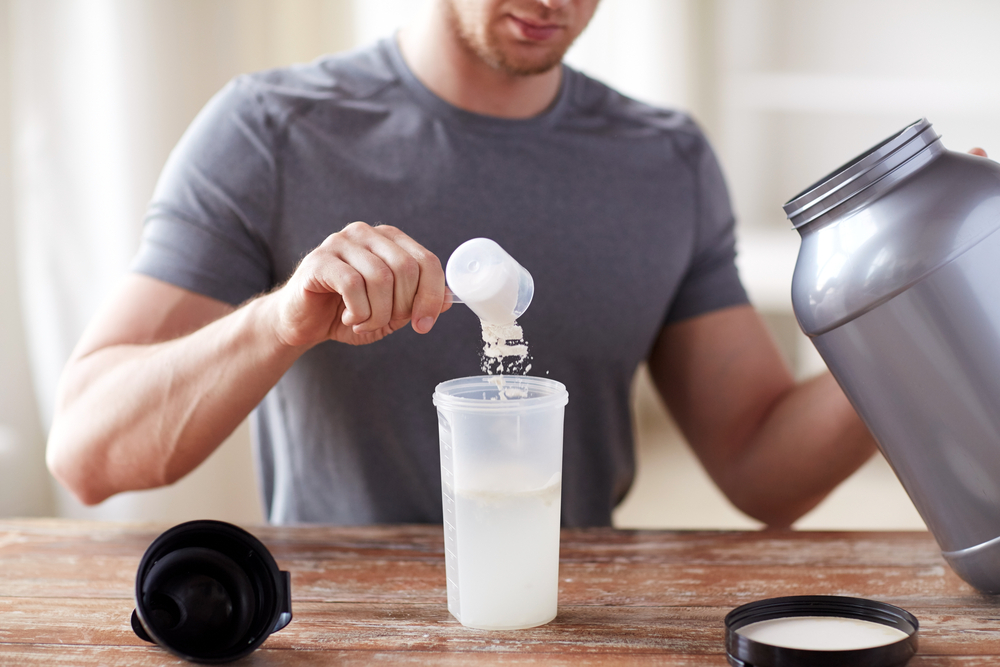
Creatine is frequently used in the field of sports. Many people ask why they should take food supplements, when everything the body needs can be found in the various foods. Well, as a sports coach, I can only advise you to take them, sparingly of course, to optimise the effectiveness and results of your training. Among these supplements, we have creatine, an amino acid that is particularly effective for your intense training sessions.
What is creatine used for?
First of all, it should be noted that creatine is a natural compound found in many foods such as red and white meat and fish. This is why our various organs such as the liver, kidneys and pancreas can also synthesise it. On the other hand, only a few grams of creatine are found in one kilo of meat. To be more precise, there are 5 grams of creatine per kilo. This is why manufacturers have thought of offering this food supplement in powder or capsules, so that you can benefit from it without having to consume an excessive amount of meat.
In general, creatine is used by sportsmen and women for its ability to
provide an immediate energy supply to the muscles, which enables them to
optimise their physical performance. It is especially effective and
recommended for intense training sessions over a short period of time,
requiring strong muscle contraction, for example a weight training
session.
Thus, the consumer can have more energy to carry out his training session. In the same way, it will also allow those who are stagnating to reach certain levels that were previously impossible to reach.
How does creatine work?
Creatine is an amino acid that will encourage the body to produce more phosphocreatine. It also stimulates the production of Adenosine Triphosphate ATP, which is the most important energy supplier for the muscles. Furthermore, creatine is also known for its ability to retain water in the muscle.
This is one of the reasons why it is particularly effective for physical efforts of high intensity but short duration. It also optimises the achievement of good muscle mass, and is therefore the perfect ally for those who want to sculpt their body and enjoy good muscle growth.
But among its many interesting properties, we can also mention the fact
that the consumption of creatine favours muscle recovery once your
training sessions have ended.
This is the advantage of using creatine. The consumption of creatine will not only provide you with the necessary energy to be able to carry out your intensive training sessions in the best possible conditions, but will also ensure that your muscles can recover optimally so that they are at their best during the next session. Your muscle fibres will then suffer less, and will be quickly ready for the next session.
What are the different types of creatine?
Generally speaking, there are two types of creatine:
- the natural version
- the synthetic version
The synthetic version is created in a laboratory and is the result of a chemical reaction between sarcosine, cyanamide and sodium. The natural version is obtained naturally from red or white meat, as mentioned above.
It should also be noted that creatine is offered in different forms in the market. Thus, we find creatine-based food supplements in powder, tablets, capsules, liquid, or other (wafers, effervescent tablets, etc. ). It is up to you to choose the packaging that suits you.
In addition, you should also know that creatine can be combined with other compounds or nutrients, depending on the needs of the athlete. This can be vitamins or minerals or proteins (protein synthesis) or other compounds.
This is how you find different types of creatine in the market, such as:
- Creatine monohydrate: this is in particular creatine monohydrate, which represents the form containing almost 88% pure creatine. According to numerous scientific studies, creatine monohydrate is safe and effective for athletes.
- Anhydrous creatine:It provides 6% more creatine than creatine monohydrate.
- Creatine ethyl:A study conducted by researchers in Nebraska* has led to the development of creatine ethyl. In theory, its absorption is improved, as it is assimilated more quickly than other forms of creatine.
- Creatine citrate:It is believed to enhance energy production in the muscles during physical activity, particularly by improving muscle contraction.
- Creatine malate:Creatine malate is said to increase the production of adenosine triphosphate atp. However, few studies have been done. Its effect would be the same as that of creatine monohydrate.
- Creatine magnesium:This formula is a combination of creatine and magnesium that acts at the level of the muscle fibre itself, as magnesium is needed to convert phosphocreatine into ATP.
- Creatine phosphate:Theoretically, it would have an immediate effect on the muscle, however no scientific study has been able to confirm this.
- Tricreatine orotate:Stimulates the formation of creatine phosphate in muscle cells and improves hypertrophy.
- Creatine gluconate: Glucose enhances creatine uptake, which leads to the production of insulin, the storage hormone. Glucose is the main source of energy for muscle cells.
How to take creatine?
The effects of creatine on the body are positive, provided that the right dosage is taken. As a sports coach, it is important to know the "Appl Physiol" or the right dose, because this amino acid does present risks (kidney function, liver, cardiovascular system, etc. ) if taken in the wrong way.
For a healthy adult, the recommended intake of creatine is 2 to 3 g per
day. But this can vary depending on the creatine concentration in the
product. For example, if your food supplement contains 88% creatine, the
dose will increase significantly, for example to 2. 5 g or 3. 5 g per
day.
Finally, as a sports coach, I have to point out that taking
creatine presents a risk of dehydration, since this amino acid will
retain water in the muscles. It is also important to be physically
active, otherwise creatine will have no effect other than weight gain
(with health risks).
The side effects of creatine
Although the effects of creatine are generally positive, scientific studies (OSTOIJC & al. , PEREIRA & al. ) have shown possible side effects. The most notable side effects are muscle cramps, nausea, diarrhoea or abdominal pain, a deficit in renal function.
*pH-Dependent Stability of Creatine Ethyl Ester: Relevance to Oral Absorption