Selenium is one of the antioxidant trace elements. Like minerals, trace elements are essential for the proper functioning of the body. Selenium makes an intervention in the metabolism of free radicals.
It is also involved in the metabolism of other substances that are produced by the oxidation of lipids within cell membranes. Selenium plays an important role in metabolism, such as in the liver and in the maintenance of skeletal muscle, heart and sperm.
This article talks about the other roles of this trace element. It also discusses its recommended dietary intake, as well as the impact of selenium deficiency or excess.
What is selenium?
As mentioned above, selenium is an antioxidant trace element. It is attached to various proteins in the body. It is particularly conserved in the muscles.
What are the benefits and roles of selenium?
There are several benefits of selenium:
- Selenium is involved in the structure of many antioxidant enzymes including glutathione peroxidase and thioredoxin reductase. These enzymes are involved in neutralising the excess of free radicals in the body. These free radicals accelerate the ageing of the cells and accentuate the appearance of various diseases, in particular cardiovascular diseases.
- The presence of thioredoxin reductase contributes to the regeneration of vitamins C and E. The latter also have an antioxidant role.
- Selenium also acts as a modulator of immune responses, particularly antiviral and anti-inflammatory responses.
- It also detoxifies certain toxic substances such as heavy metals and foreign molecules including xenobiotics.
- This trace element is also involved in thyroid metabolism.
What are the recommended nutritional references or intakes?
The recommended nutritional reference varies according to the proportion of body weight of each individual.
- For children, the intake is set at 1µg per kilo of weight per day.
- For adults, both men and women, the intake is limited to 70 µg per kilo of weight per day.
- For people over 75 years of age, the recommended reference is 80 µg per day. The increase in oxidative stress with advancing age must be taken into account. This will help maintain the proper functioning of the immune system.
- For sportsmen and women who engage in intense activity, the intake is set at 10 to 30 µg per day depending on the equivalent energy expenditure. Oxidative phenomena due to muscle work must also be taken into account.
For example: 50 g of cooked lentils (equivalent to 2 tablespoons shaved) + 50 g of canned tuna (equivalent to half a can) + 1 egg = 100% of the recommended intake for a person weighing 60 kg.
What foods provide selenium?
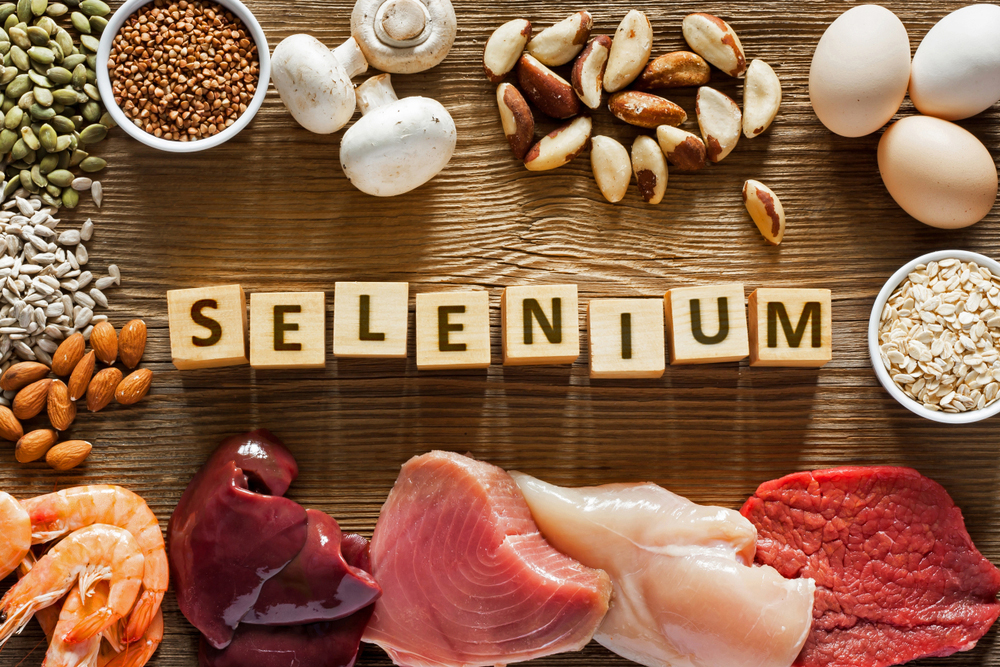
There are many food sources of selenium. But fish and seafood are the richest in selenium. After that, there are also meats, eggs, wholegrain foods, offal, nuts and pulses. Brewer's yeast is also a supplement to selenium intake.
Here is an example of a reference selenium content according to foods:
Selenium content in micrograms (µg) per 100g of food
-
Cooked duck 35
-
Button mushroom 22
-
Cooked green cabbage 15
-
Cooked calf's liver 22
-
Raw or cooked ham 23 to 24
-
Cooked lentils 4
-
Brewer's yeast 71
-
Cooked flounder 73
-
Grilled monkfish 425
-
Cooked mackerel 95
-
Hake cooked 119
-
Cooked mussel 58
-
Walnut 19
-
Cooked egg 2
-
Cooked clam or prawn 52
-
Whole wheat pasta 131
-
Cooked chickpeas 45
-
Red pepper 19
-
Cooked chicken 17
-
Roast pork cooked 39
-
Canned sardines 48
-
Tuna in a can 68
What happens if there is a lack or excess of selenium?
There are several impacts if the nutritional reference for selenium is not met.
The impacts of selenium deficiency: risks and causes
It has been found that selenium deficiency causes Keshan's disease, in other words a heart failure disease. Its presence is therefore essential for the organism because this cardiomyopathy can be fatal in the event of a deficiency in this trace element.
Inadequate intake, such as during vegan diets, or due to poor assimilation following an infection of the small intestine (coeliac disease, Crohn's disease) can also cause a lack of selenium. This deficiency can lead to heart arrhythmia. Resistance to infections also becomes very weak.
The muscles also become weak. It also leads to anaemia. Arthritic manifestations are also symptoms of selenium deficiency. And if this deficiency is followed by an iodine deficiency, it can cause hypothyroidism or a deficiency in thyroid hormones.
The impact of selenium overdose: risks and causes
If the body overdoses on selenium, it can cause selenosis. This is manifested by skin lesions. The hair and nails also fall out. There is also the presence of digestive disorders. The body becomes tired and irritated. It also causes garlic smelling bad breath with a metallic taste in the mouth.
Selenium overdose may be due to excessive supplementation. In some areas, drinking selenium-rich water or beverages can cause this overdose. The selenium intake from tap water is set at 10µd per litre in France.
According to a French expert, the safe limit for selenium is 150µg per day. This includes all sources including food, drinking water and even dietary supplements. For other countries, the dose is higher, at 400µg per day, as in the USA for example.
What are the interactions?
- Intakes of fibre, phosphorus or heavy metals (such as lead or mercury) decrease selenium uptake.
- When taking multivitamin dietary supplements, sodium selenite should not be combined with a high dose of vitamin C, more than 60g, as this can block selenium uptake. However, a low dose of vitamin C has no impact.
To conclude
In summary, selenium is one of the trace elements that are essential for the metabolism to function properly. It plays an important role in the detoxification of the body, as well as in many enzyme structures. It is important to respect the recommended dose for each body according to its age group. Also avoid deficiencies or overdoses in order to avoid any disadvantages.