Iodine is one of the trace elements fundamental to the creation of thyroid hormones. These recognize a very important value during the fetal stage (formation of the nervous system), during puberty, and overall throughout a man's life. Like minerals, trace elements are essential to the proper functioning of the body.
Therefore, what is the function of this trace element, what does it really bring to the body in terms of nutritional value, and what are the risks in case of under- or overdosing?
Iodine, what is it?
Iodine under the chemical symbol I in the periodic table of elements is one of the necessary trace elements. It is found in the thyroid gland in the human body.
What are the functions of iodine?
- Iodine plays a very important role in the thyroid gland, mainly in the production of the thyroid hormones T3 (triiodothyronine) and T4 (tetra-iodothyronine).
- From the time of foetal formation, these hormones are responsible for the functioning of growth and cell maturation. They are also involved in brain development.
- During an individual's lifetime, they regulate thermogenesis (heat production to keep the body at 37°C) and energy metabolism (the level of caloric expenditure), and they are involved in protein synthesis.
How much iodine should be consumed?
For a child from 6 months to 6 years of age, the daily nutritional requirement for iodine is 90 micrograms. From the age of 7 to 10 this requirement rises to 120 micrograms, for adolescents and adults, men and women need 150 micrograms and for pregnant and breastfeeding women 200 micrograms per day.
In addition, for sportsmen and women, the need can be increased by 50 micrograms per day in the case of heavy sweating and according to the activity practised.
It should be noted that for a person who smokes, the need for iodine is greater, because elements in the smoke reduce its content by the thyroid gland.
What foods are rich in iodine?
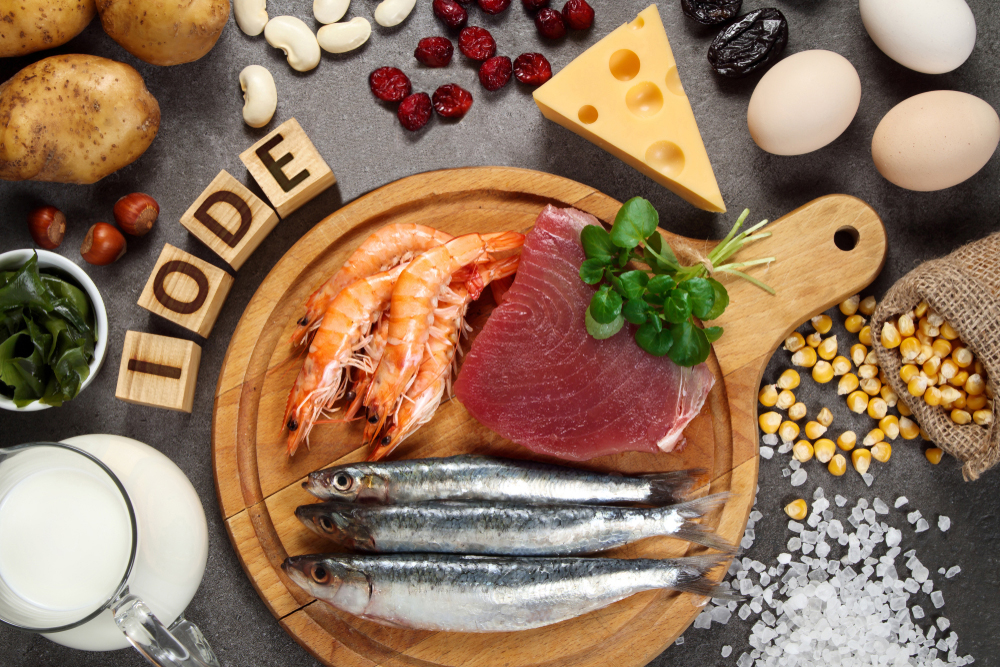
In first place, foods from the sea (seafood and fish) contain the most iodine, followed by dairy products such as cheese, and eggs.
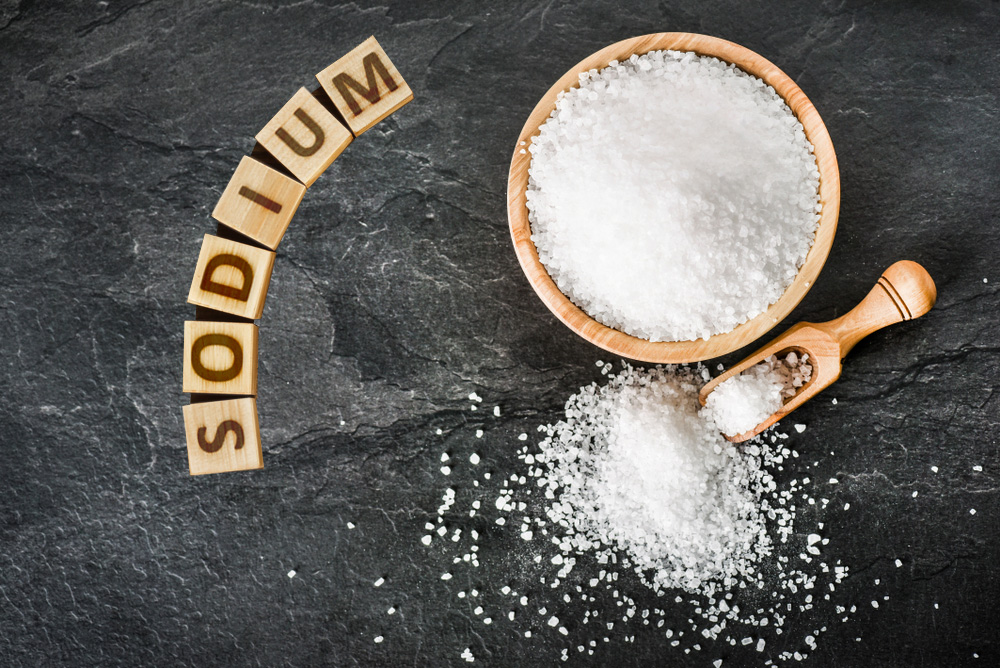
The French National Agency for Food, Environmental and Occupational Health Safety (Anses) recommends the use of iodine-enriched salt (iodized salt) to avoid any deficiency or lack, especially for those who do not eat enough fish or seafood.
Do not forget seaweeds, a priori brown seaweeds, sea beans, wakame, kombu or kelp, which are rich in iodine: for example, 1g of royal kombu is enough to provide the 150 micrograms needed per day for an adult. However, their consumption must not exceed the safety limit for iodine.
The top 5 foods with the highest iodine content for a 100g quantity are: firstly iodised salt which contains 1860 micrograms of iodine, canned cod liver which contains 368 micrograms, cooked haddock with 260 micrograms, cooked mussels with 195 micrograms and finally cooked tuna containing 150 micrograms.
Example: if an adult eats 100g of cooked cod (a small fillet), accompanied by a natural yoghurt, with 20g of wholemeal bread (a thin slice), this will provide 100% of the iodine intake. Bottom of the form
What happens if there is too much or too little iodine?
Iodine underdose, consequences and danger
Iodine levels vary from country to country, depending on the geology and the presence of this trace element in the environment. The most deficient areas are the mountainous regions.
According to the World Health Organisation (WHO), iodine deficiency affects one quarter of humanity. In countries where the deficiency is most widely recognised, brain damage can occur from birth, known as "endemic cretinism". This mental retardation is permanent. Children as well as adults with this deficiency often have a goitre (large neck), which results from an enlargement of the thyroid gland.
In developing countries, iodine deficiency can affect fertility and lead to thyroiditis (lack of thyroid hormones), which is defined by several symptoms: weight gain, coldness, joint pain, fatigue, depression, etc.
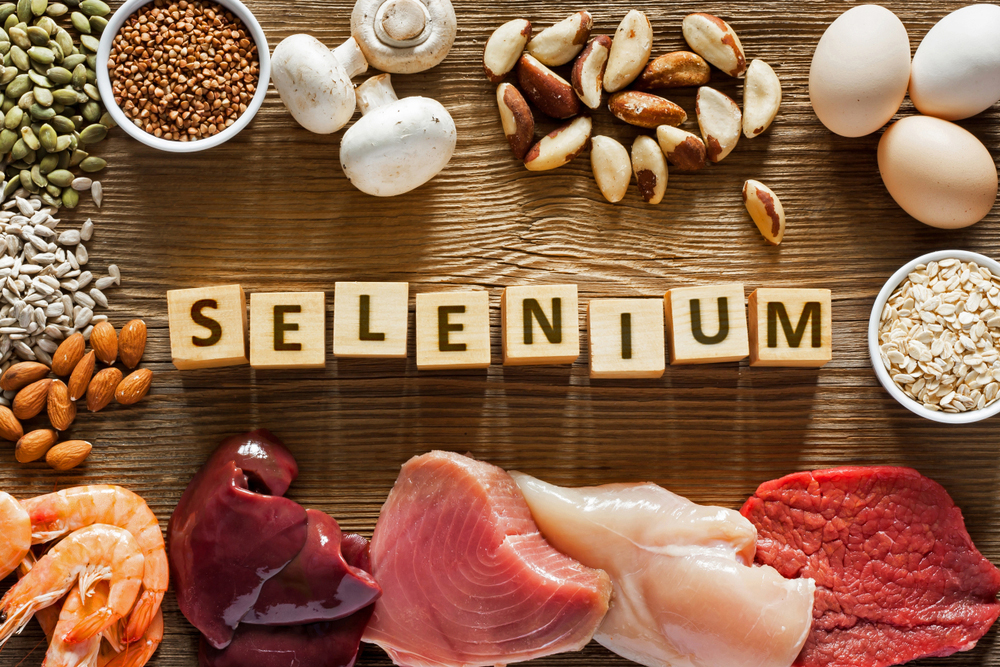
Selenium deficiency also increases the risk of hyponoid and alteration of the thyroid gland. For pregnant women, it is a sensitive subject due to the lack of iodine, which can lead to a risk of prematurity, neonatal mortality, neonatal hypothyroidism, and delayed growth and development.
In areas with moderate deficiency, thyroid uptake of radioiodine is somewhat alarming. This increases the risk of irradiation of the gland in the event of a nuclear incident that releases massive amounts of iodine.
Fetuses and children, where the rate of intra-thyroidal turnover of iodine is rapid, are at greater risk of hypothyroidism and thyroid cancer.
Iodine excess: the risks
Excess iodine can lead to hyperthyroidism (too much thyroid hormone in the blood, with symptoms of weight loss, bone demineralisation, increased heart rate. . . And it is often associated with certain thyroid cancers.
It can be dangerous for autoimmune disease (a disease in which the body creates antibodies against its own tissues) of the thyroid, causing inflammation of the gland.
In order not to reach this stage of excess, the dose limit is 600 mg per day for an adult, including food intake, iodised salt and any food supplements containing iodine (vitamin and mineral cocktails, slimming food supplements, etc. )
Note
- Many constituents of food origin have a goitrogenic effect: they block the capture of iodine by the thyroid gland or the formation of thyroid hormones. These are the cyano-glucosides in cassava, maize and sweet potato, thioglucoses from crucifers (cabbage); flavonoids from millet and sorghum; disulfites such as from garlic or onion. However, when digested in a varied and balanced diet, they do not affect iodine status, and their quantities in food can be reduced by several stages of preparation, especially during cooking.
- In case of hypothyroidism, a diet based on soya (juice, yoghurt, tofu. . . ) should be avoided, as their phytoestrogens change the effectiveness of the treatment.
- Another trick to increase the need for iodine by alternating the release of T3 and T4 hormones by the thyroid gland is treatment with lithium (mood regulator)
- Iodine deficiency or excess can change the effectiveness of thiazole, a drug that may be recommended for hyperthyroidism.
In conclusion
In conclusion, iodine is a trace element which is extremely involved in the activity of the hormonal system, it contributes to the production of hormones and acts on the glands in function of the organism, such as the regulation of body temperature, growth mainly in children, the proper functioning of the nervous system or also the use of carbohydrates, lipids and proteins in the diet to promote energy production.
It is also involved in maintaining normal skin, and is partly responsible for cognitive function such as concentration, memory and reasoning. So why not get those 150 micrograms a day if it's for these benefits?