For those who are considering a diet, it is important to know that white meats are real slimming allies. They offer a stable but calorie-free diet. Lean white meats have low fat content and a high protein content.
For people who want to lose weight without depriving themselves of meat, it is best to eat these lean white meats. But what are the different types of white meat suitable for weight loss? Before knowing the varieties of white meat, here are its specificities.
What is white meat?
In view of the above information, white meat is nothing other than lean meat. However, scientific studies have shown that meat consumed within an identical animal species has a lipid content that can be as high as three times higher.
This is why it is important to vary between calves, pigs, rabbits and poultry, which are all white meats. By varying these meats, the meal will be rich in protein.
The characteristics of white meat
Meat is distinguished primarily by its characteristics. This is why there are three categories. White meats are those from calves, pigs, rabbits and poultry. Red meats are those from horses, sheep, cattle and lambs. Finally, black meats are those from game animals and feathered animals.
It is true that all meats contain proteins and iron, but white meats have their own nutritional values depending on the species of animal and the quantity consumed. But regardless of the species, there are always fatty and lean cuts. In other words, the fat content varies from one piece to another.
Depending on the cuts consumed and the species of animal, white meats are very particular. If the fatty parts of pork are not removed, they will subsequently be fatty meat, and the same applies if the skin of poultry is eaten.
White meat and its nutritional value
Again, white meat has nutritional values. Only these differ according to the animal species.
- 100 g of white meat from chicken, more precisely from the thigh without skin, has 19. 3 g of protein, 4. 05 g of fat, 1. 03 of saturated fat, 1. 3 of mono-saturated fat, 0. 98 of poly-saturated fat, 81 mg of cholesterol, 0. 99 mg of iron, 1. 8 mg of zinc, 92 mg of sodium, 0. 42 µg of vitamin B12 and 114 kcal of energy.
- 100 g of white meat, more precisely at the rib level, contains 18. 3 g of protein, 12. 9 g of fat, 4. 84 saturated FAT, 5. 54 monosaturated FAT, 0. 93 polyunsaturated FAT, 82 mg of cholesterol, 1. 26 mg of iron, 5. 62 µg of selenium, 4. 29 mg of zinc, 43. 4 mg of sodium, 2. 82 µg of vitamin B12 and 189 kcal of energy.
- 100 g of white meat from pork at the rib offers 19. 8 g of protein, 0. 38 g of carbohydrates, 9. 3 g of fat, 3. 75 mg of saturated fat, 4. 3 mg of monosaturated fat, 1. 01 mg of polyunsaturated fat, 56. 4 mg of cholesterol, 0. 66 mg of iron, less than 40 µg of selenium, 2. 31 mg of zinc, 49. 2 mg of sodium, 0. 35 mg of vitamin B12 and 164 kcal of energy.
- 100g of white meat from rabbit provides 20. 4g protein, 0. 66g carbohydrate, 11. 6g fat, 4. 74 saturated fat, 3. 87 monosaturated fat, 2. 74 polyunsaturated fat, 58. 5mg cholesterol, 1. 11mg iron, 10µg selenium, 1. 64mg zinc, 56. 3mg sodium, 2. 9µg vitamin B12 and 189kcal of energy.
The different types of lean white meat
Lean white meat differs according to the animal species. The protein and iron content also depends on the species.
Veal
For people who want to keep their figure, veal is the best choice of meat to eat. It can be eaten as a cutlet and roast.
Rabbit
Rabbit meat is high in calories, but contains protein. For a 100 g portion, there are 150 calories. This type of meat is excellent and can be combined with different vegetables.
Pig
It is important to know that pig meat is not good for dieters. They contain mainly fat. 85 g of tenderloin is on average 4. 9 g of fat. And for the white ham, it is 3. 25 g of fat. These parts of the pig are dietetic.
Poultry
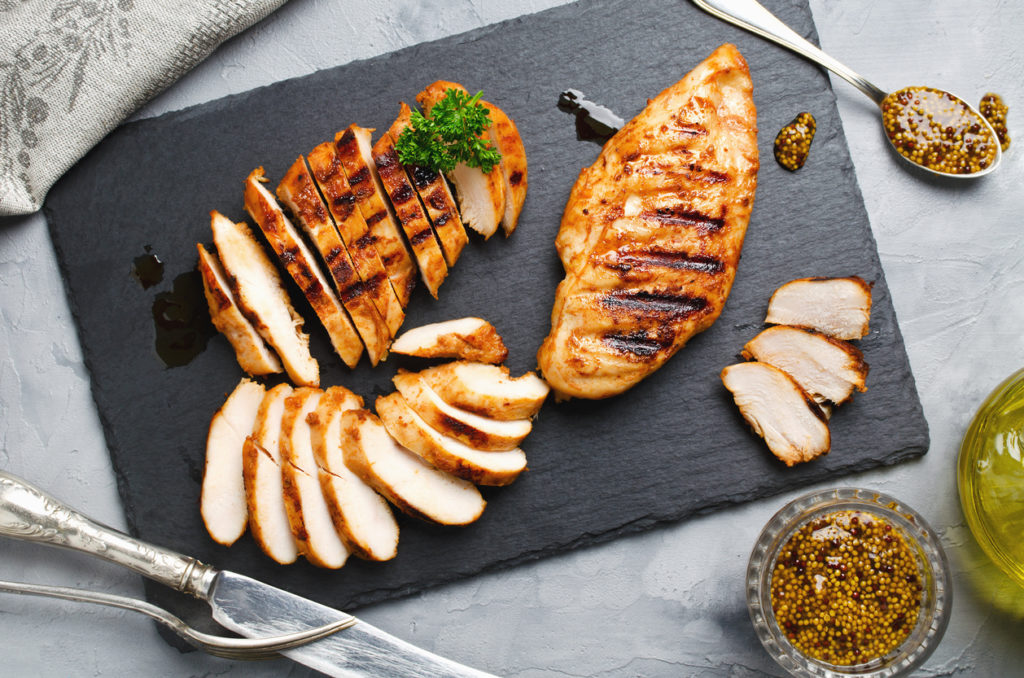
The main advantage of poultry meat is that it is always lean. Meat from turkey or pheasant and chicken is enriched with proteins, minerals and vitamins. Apart from that, they also contain sources of antioxidants.
The benefits of white meat
Given this information, it is quite clear that eating white meat is beneficial to the body.
- Its protein content and amino acid intake build the essentials for the body to function properly.
- With reduced collagen, digestibility becomes high.
- Also rich in iron. The intake varies according to the species. Calves are the richest, followed by rabbits and finally pigs.
- With the presence of zincs, they contribute to growth and the immune system.
- They also help to prevent cell ageing thanks to their selenium content.
- With its contribution of vitamins B6, B3 and B12, lean white meat plays an intervention role in the structuring of red blood cells.