Vitamin k plays an important role for our body on several levels, so it is essential to ensure a correct intake of it, by all possible means. Here's more information on vitamins of the k group, which are essential for our health, and how to consume them every day.
What is vitamin k and what roles does it play?
Vitamin k is synthesised by the bacteria of the intestinal flora and contains elements involved in blood clotting. It can be stored in our fatty tissues, as it is a fat-soluble vitamin.
It has a certain sensitivity to light, but also to air and heat. It is therefore necessary to store food in a cool and dark place in order to preserve the qualities of this vitamin.
In addition, foods containing vitamin K should be consumed quickly to avoid degradation of the food and its properties.
Vitamin k is provided by food, and can be found in two forms: vitamin k1 and k2. They are not found in the same foods. The first is found in plant foods (green tea, green vegetables, etc. ), while the second is found in animal foods.
In addition to the fact that it is present in our food, this vitamin is also produced in part by the human body, thanks to our intestinal bacteria.
Group K vitamins are essential to the health of everyone, whether you are a woman, a man, a child or an adolescent. In case of a confirmed deficiency, the person should also take vitamin k3 or menadione, which is a synthetic form of vitamin k.
Vitamin K for athletes
In addition, vitamin K is very important for the nutrition of sportsmen and women. Athletes must therefore take particular care in the way they eat. This vitamin is largely found in foods that contain good amounts of it, as we will see later.
This vitamin is a sportsman's friend because it plays a fundamental role in bone health, facilitating the action of a protein that is involved in the process of bone calcification. This is l'osteocalcin.
Vitamin K in the diet therefore contributes to better bone strength. This reduces the risk of bone problems during sports activities.
Its action is not to be neglected, because it prevents an injured sportsman from suffering from a haemorrhage aggravating his injury.
The use of vitamin k
Vitamin K is useful for coagulating the blood and reducing the risk of bleeding during spontaneous bleeding or injury, among other things. Specifically, it fights against hemorrhagic disease.
It is also known to play a significant role in bone health, both in adults and in children and adolescents.
Children and teenagers are growing and need to take this vitamin every day, as it plays a role in bone growth and strength.
To summarise, vitamin K is involved in:
- in the mineralisation of bones;
- in the blood coagulation;
- in cell growth;
- or in cardiovascular health;
In addition, vitamin K has anti-inflammatory properties.
It is also known that vitamin K passes very well into breast milk, which is good for the baby's nutrition. It is also recommended that mothers-to-be take a vitamin K supplement during the first 6-8 weeks after birth, at a dose of 5 mg per day. This not only increases the amount of breast milk available, but also increases the serum levels of a breastfed baby.
For good health, it is strongly recommended to eat foods rich in vitamin 011 K. Below you will see some particularly interesting foods to include in your meals. Note that green tea contains vitamin K, which is interesting for tea drinkers.
What is vitamin k1 used for?
Vitamin k1 or phylloquinone plays several important roles in the blood:
- for blood coagulation to avoid blood clots;
- in a pregnant woman, it was prescribed 2 weeks before she gave birth, to avoid a risk of haemorrhage during birth.
Where is it found?
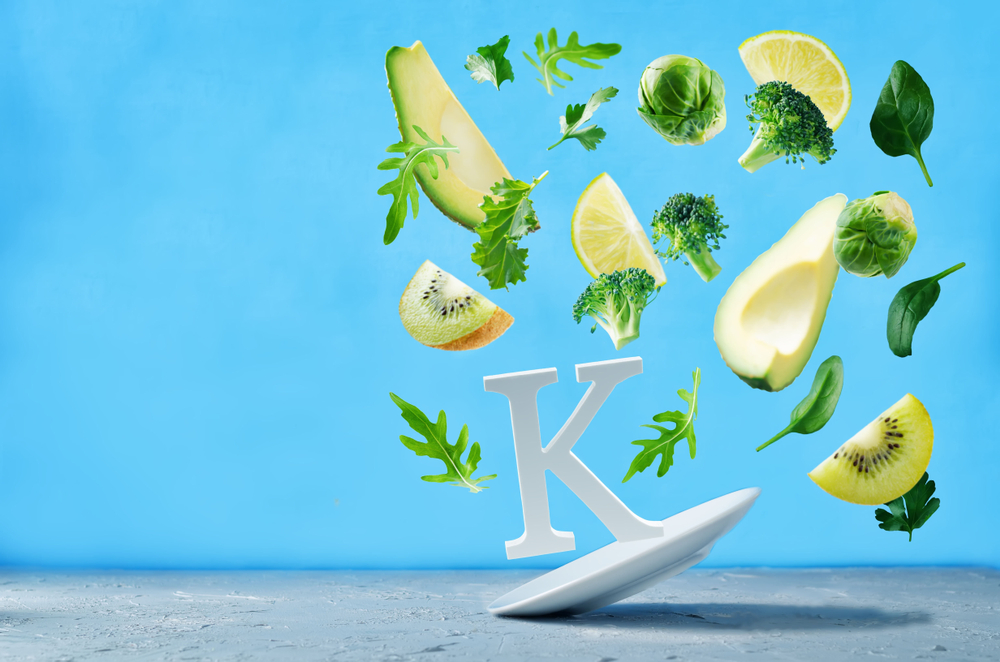
Vitamin K1 is found in the following food sources:
- broccoli;
- Brussels sprouts;
- green beans;
- Cucumbers;
- Cauliflower ;
- Apples ;
- Plums Reine-claude ;
- blueberries ;
- or lettuce, watercress and parsley;
Other sources include wholemeal bread, barley, soya oil, oats, rapeseed oil and olive oil.
What is vitamin k2 used for?
This vitamin, in turn, plays a role in bone health. A deficiency of this group of vitamins is considered to be associated with an increased risk of osteoporosis.
Fortunately, this vitamin is produced by intestinal (colon) bacteria. The bacteria in the flora therefore play an important role in ensuring that the body has this vitamin, apart from the food.
Where is it found?
Very important for bone health, it is only available in natto made from fermented soya (natto is Japanese) or in cheese. It is also found in:
- meat;
- offal;
- and products that have been fermented such as natto.
What is vitamin k3?
Vitamin k3 or menadione is different from the other two forms as it is a
synthetic form which is water soluble, unlike the other k vitamins.
Once
absorbed, it converts to vitamin k2 within our bodies.
This form of the vitamin also has a much higher biological activity than the k1 and k2 forms (2 to 3 times higher), which is not negligible.
Undesirable effects
Be careful, because vitamin k3 can cause oxidation of cell membranes in adults.
It can also be dangerous for infants, since it destroys their red blood cells, which will cause anaemia.
What happens if there is a deficiency?
Deficiencies of vitamin K are generally uncommon, as a varied diet covers the nutritional requirements. However, a deficiency of this vitamin will cause poor blood clotting, which can put a person at risk of bleeding.
There is also a risk of bone fracture and an increased risk of osteoporosis (the bone becomes fragile).
A person with a deficiency also has a high probability of developing a very serious liver disease. Finally, the deficiency can lead to intestinal disease or disease of the bile ducts.
If the tests show a deficiency, this vitamin can be prescribed by the doctor in the following cases:
- in pregnant women who need more vitamin K;
- in a person with frequent bleeding (bleeding disease), or with a high risk of bleeding;
- in a person with osteoporosis;
- and in breastfed infants and premature babies whose mothers are not taking a vitamin K supplement;
In these cases, the person will need to take a course of treatment to restore the correct vitamin K level. To do this they will need to take vitamin k in the form of food supplements.
Note that the vitamin can either be prescribed by the doctor, bought in a pharmacy or purchased from an online pharmacy.
Of course, the deficiency must be proven and confirmed by a specific blood sample, to avoid any risk of overdosing.
Are there any contraindications to taking vitamin K?
Yes, in people on anticoagulants, or taking VKAs, there can be adverse reactions, potentially dangerous for them.
Indeed, this can affect the patient's blood coagulation. There is a conflict between the action of the vitamin k (to coagulate the blood) and the anti vitamin k which, on the contrary, is intended to fluidify the blood of the person.
A patient on an anticoagulant should therefore have regular INR tests (blood tests) to adjust his treatment as necessary.
Indeed, these foods are allowed, but in small quantities, so as not to conflict with the VKAs or anticoagulants. The person should most often pay attention to the consumption of green vegetables rich in vitamin K.
Conclusion
In conclusion, we must take care every day to consume foods rich in vitamin K,vitamin K1 and k2 to have a good intestinal flora, among others. This vitamin is therefore essential from a very young age.
Sportsmen and women must also take care to eat food containing a good dose of vitamin K, in order to practise their sports activities without taking risks to their health, and thus avoid a haemorrhage or a fracture during an injury.