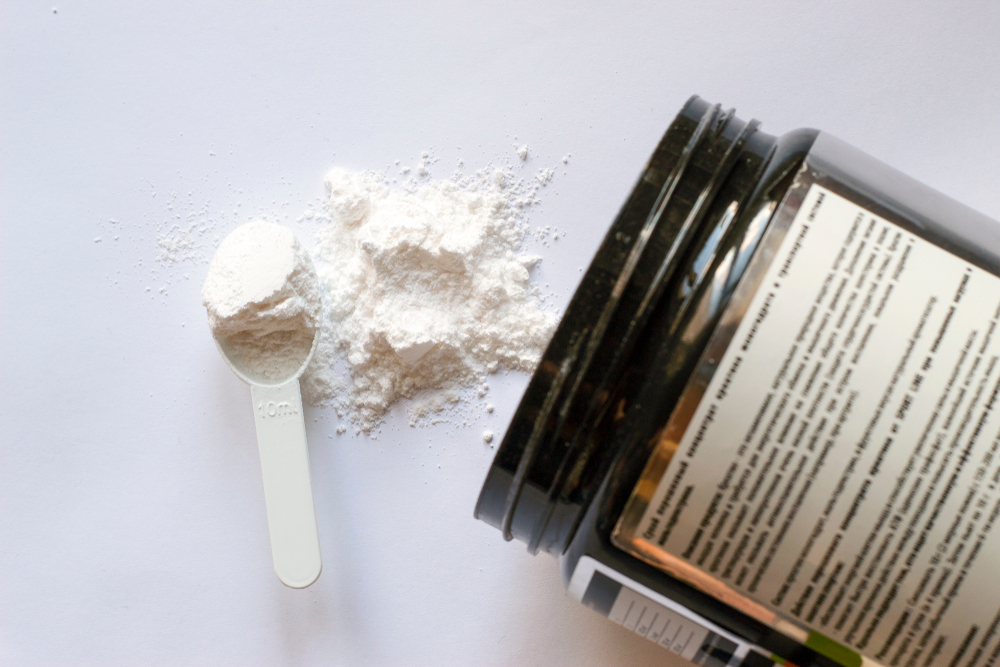

BCAAs, or branched chain amino acids, are the main building blocks of protein. These proteins are essential to the body, especially for the formation and regeneration of muscle tissue. However, it is impossible for the body to synthesise and store them, so these amino acids will be supplied through the diet or by supplementation with BCAA.
BCAAs, what are they?
BCAAs, an acronym for branch chain amino acid, are amino acids that top athletes and bodybuilders consume for several reasons. They are composed of 3 essential amino acids, namely leucine, isoleucine and valine. A branched structure of these amino acids helps to assimilate them more easily by making them more digestible.
They can be used instantly by the body and do not need to pass through the liver. Their consumption is becoming more and more popular, as they are one of the most popular food supplements. Athletes use them to improve their performance during exercise.
While athletes regularly consume them for this purpose, many also take them to promote recovery. They are characterized by a rather high absorption speed which makes their efficiency immediate. The categories of BCAA vary according to their content in each of the 3 essential amino acids. They can be found under the reference BCAA 8:1:1 or BCAA 4:1:1 or BCAA 2:1:1.
Why take BCAA?
As the body cannot produce or store protein, the breakdown of protein will have to be compensated for by diet and/or BCAAs. There are many reasons to take BCAAs, whether it is for those who are physically active on a regular basis (weight training, running. . . ) or for those who are simply active.
BCAA's are of interest for muscle development for weight trainers, weightlifters and throwing athletes (javelin, discus, hammer or shot put), who take them regularly during training. Athletes who practice endurance sports such as marathon running, long-distance running, cycling or triathlon have a rather high protein requirement.
As protein breakdown cannot be compensated for by the body, muscle recovery is aided by taking BCAAs; a theory confirmed by several studies* which point to a noticeable reduction in muscle soreness. BCAAs are also said to reduce fatigue during exercise, but also to increase performance.
It is claimed that muscle protein synthesis is optimised by taking whey protein at the same time. Indeed, whey protein allows an additional protein intake to further promote the reconstruction of muscle tissue.
The intake of BCAAs ensures the synthesis of proteins, which is very important for reducing muscle soreness caused by training requiring a certain amount of strength and endurance.
For people who start a fairly sustained physical activity, taking BCAAs will protect them from exhaustion and muscular pain, especially if they are involved in endurance sports like cycling, running or circuit training. Consumption during training can also increase the frequency of training sessions and, subsequently, the intensity of the sessions.
But if sportsmen and athletes use it, some also consume it to regulate their growth hormone levels. Indeed, although no study has been able to confirm this, BCAAs are believed to boost the synthesis of growth hormone, which in turn plays an active role in muscle anabolism.
Many women also use them to lose weight, as they are said to be a real "fat burner" to optimise muscle development and reduce lipid substances.
When to take BCAA?
It must be said that BCAA supplements are essential, and even recommended for athletes and sportsmen, particularly because of their action on muscle protein synthesis. However, for more efficiency, it is necessary to know how to choose the right ratio of each amino acid, component of the BCAA.
To gain mass, the ideal is the BCAA 8:1:1 which translates into 8 portions of leucine and 1 portion of isoleucine and valine. To build muscle, prefer BCAA 4:1:1 which stimulates protein synthesis. For a leaner body it is recommended to use BCAA 4:1:1 or BCAA 2:1:1.
BCAA supplements come in several brands and are packaged in several forms, namely capsules or powders. One in particular is recommended for easier absorption, namely the powder. It can be mixed with fresh water and consumed throughout the training session. In addition to providing nutrients to your body, it will give the water a fruity taste (strawberry, forest fruits, watermelon. . . ) and will facilitate hydration during the sports session.
We recommend taking 5 to 11 grams of BCAAs either during exercise (finish the dose 20 minutes before the end of training) or between 30 minutes and 1 hour after training for good muscle recovery.
BCAAs can also be consumed according to the objective. For example, for a mass gain, it would be better to take 5g of BCAAs in the morning, a few minutes before breakfast or after training (if you train in the morning).
Dry weight gain will be optimised by taking 5 grams of BCAAs before and after training; and weight loss would be favoured by taking 2 grams in the morning and between each meal, every day, even when not training.
Indeed, one study** has shown that leucine and isoleucine appear to induce the secretion of the intestinal satiety hormone and thus reduce appetite.
Bibliography
* Fedewa MV Int J Vitam Nutr Res. 2019 Apr 2: 1-9. ** Min Tian Diet and function Number 6,