
What are trans fatty acids?
Fatty acids are components of dietary fat. They always contain carbon atoms with a fairly long chain. They are also distinguished by the nature of the bonds between these carbons. They can be single or double with a "cis" or "trans" carbon chain spatial configuration.
A 'trans' fatty acid is one where the trans geometric configuration has a double bond.
There are many trans fatty acids, but the best known in foods are vaccenic acid and elaidic acid. There is also oleic acid, rumenic acid from linoleic acid.
What foods contain trans fatty acids?
As the body does not generate trans fatty acids, they are supplied by food. They are found in:
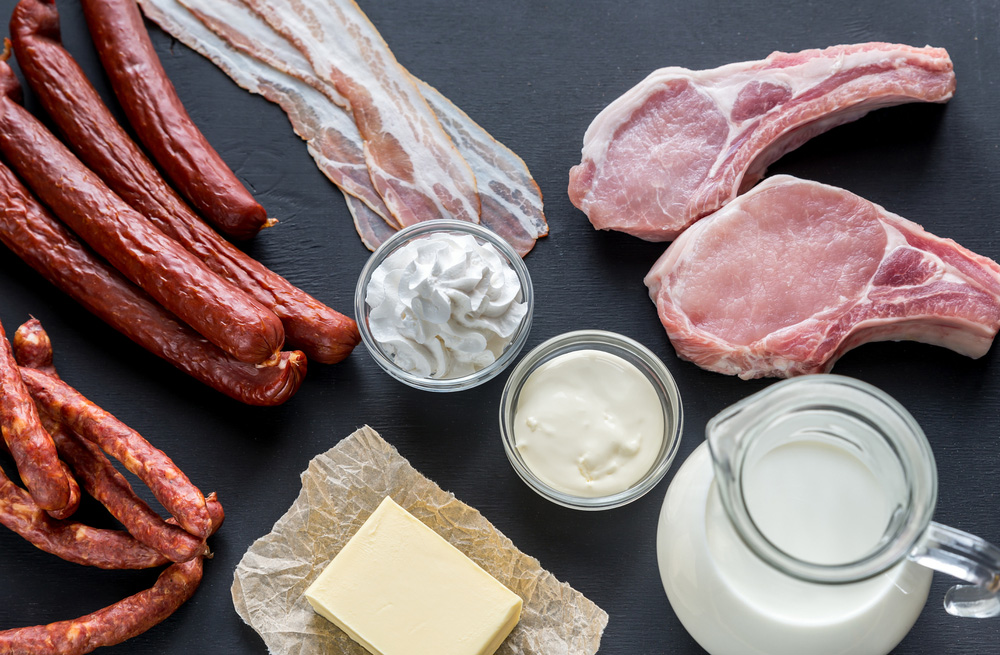
- meats, milk and dairy products such as butter, cheese, yoghurt. Fatty acids are made in the stomachs of all ruminant animals such as beef, lamb and sheep using unsaturated fatty acids in the grass they eat.
- Various industrial foods that have partially hydrogenated oils or fats in their components. The transformation of cis to trans bonds takes place during the hydrogenation step. This step is done from a fluid oil, a more solid fat and less susceptible to shaving. They are therefore found in certain sweet and savoury biscuits, pastries, chocolate bars, bread, dehydrated soups, etc.
- Fried foods and also in grilled meats. When exposed to high temperatures, cis-fatty acids produce trans-fatty acids. This happens especially during undercooked meals, or when industries use high temperatures. The trans fatty acid content of foods is not included in all composition tables, especially in the reference table in France, the Ciqual table. Nevertheless, it is indicated on food labels as well as on the labels of some margarines, even though European regulations do not require it to be included.
What are the health effects of trans fatty acids?
The first scientific information on trans fatty acids was published in the 1990s. Based on research carried out on a cohort of American nurses (Nurses' Health Study), it was found that the consumption of trans fatty acids caused an increased risk of cardiovascular disease. This was alerted to and published in 1993.
There was also other research done on populations that regularly eat trans fatty acids in excess, such as in the Netherlands, Finland, and Canada that confirmed this finding during the following year.
The French Food Safety Agency, in France, has recommended a reduction in fat consumption, based on its first report published in 2005. The health risks and benefits of fatty acids were highlighted in this publication.
Studies have been done on the impacts of trans fatty acids on the birth weight of infants, on the carbohydrate metabolism of sugars and on insulin resistance (the predisposing phenomenon to type 2 diabetes). It has also been done on obesity, on the immune system and on the occurrence of various cancers. But according to contradictory or not enough results, no conclusion has been shown on negative effects.
Nevertheless, the adverse effect on the cardiovascular system has been confirmed in intervention studies, which report that a high intake of trans fatty acids causes an increase in the blood level of LDL-cholesterol (which is one of the bad cholesterols that clog the arteries in excess). This high intake also reduces the level of HDL-cholesterol (which are good cholesterols that protect the arteries).
Recent studies have distinguished the difference between trans fatty acids contained in ruminant meat or milk and trans fatty acids of technological origin produced during the hydrogenation of oils. According to the Anses, the consumption of trans fatty acids from ruminants has no negative effects on LDL and HDL levels if the level does not exceed 0. 5 to 0. 7% of energy intake. Even 1. 5% for the highest consumers. This does not lead to an increase in cardiovascular risk in observational studies either.
On the other hand, if the level of intake of trans fatty acids of technological origin exceeds 1. 5% or 2% for trans fatty acids from industrial foods and from ruminant meat or milk at the same time, this will indeed cause a cardiovascular risk.
How to set a limit on the content of trans fatty acids?
Scientific studies show that it is not necessary to remove trans fatty acids in order to be healthy. The ideal is to consume them in moderation. According to the recommendation of Afssa in 2015, which is still valid today:
- you should choose to consume semi-skimmed milk and dairy products, in preference to whole products. It is still advisable to consume three dairy products a day. However, cheese should be limited to one portion per day, as it is higher in fat than dairy products and contains more trans fatty acids.
- Opt for minced steaks with as little fat as possible, around 5% MG. The ideal is to limit the consumption of fatty meats and not to exceed 500g per week apart from poultry.
- Reduce the consumption of industrial foods that are not rich in nutrients, such as pastries, biscuits and chocolate bars. These are quick sources of trans fatty acids.
- If there is no information on the label about trans fatty acids, choose products that contain the least amount of saturated fatty acids (which are always indicated). A food always contains a mixture of trans and saturated fatty acids.
- Frying produces fatty acids during cooking. Do not exceed 180°C and do not exceed the required cooking time. And filter the frying bath and store it in the refrigerator. It can be reused up to 5 times.
So, trans fatty acids are not dangerous for your health as long as they are consumed in moderation. You just have to respect the necessary nutritional intake.