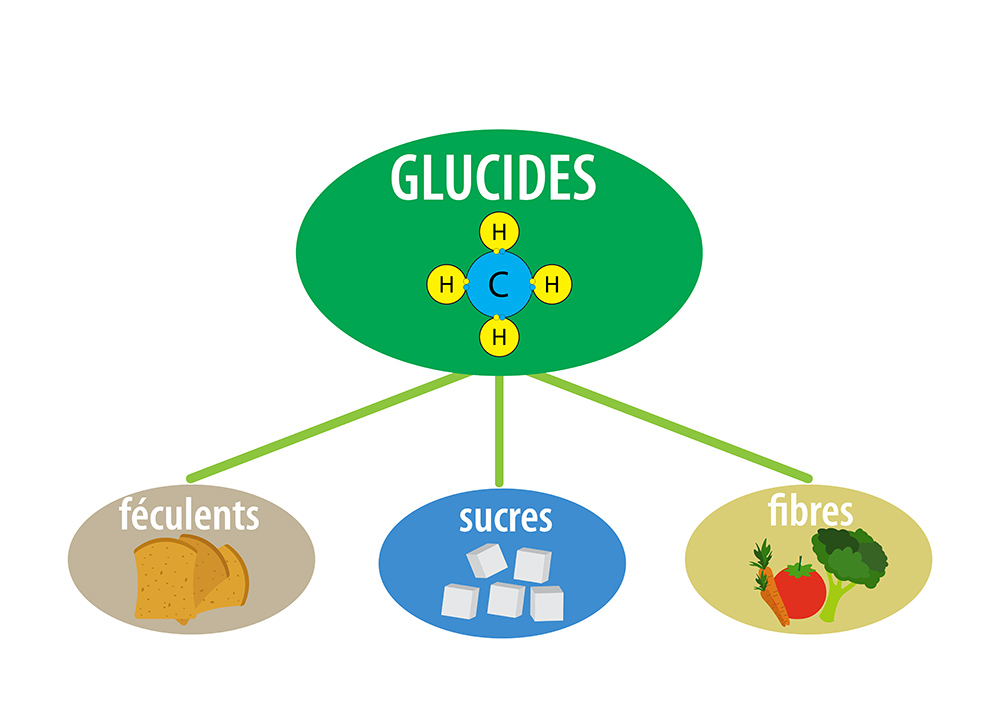

Sugar is the body's fuel! For athletes, there is no question of making a mistake with this essential food. For an average population, the consumption of carbohydrates should represent 55% of the total energy intake, keeping in mind the rule "neither too much, nor only". Indeed, a massive intake at the wrong time will lead to the storage of the surplus in fat rather than in energy, whereas a reasoned intake at the right time will favour performance.
WHAT IS THE GLYCEMIC INDEX?
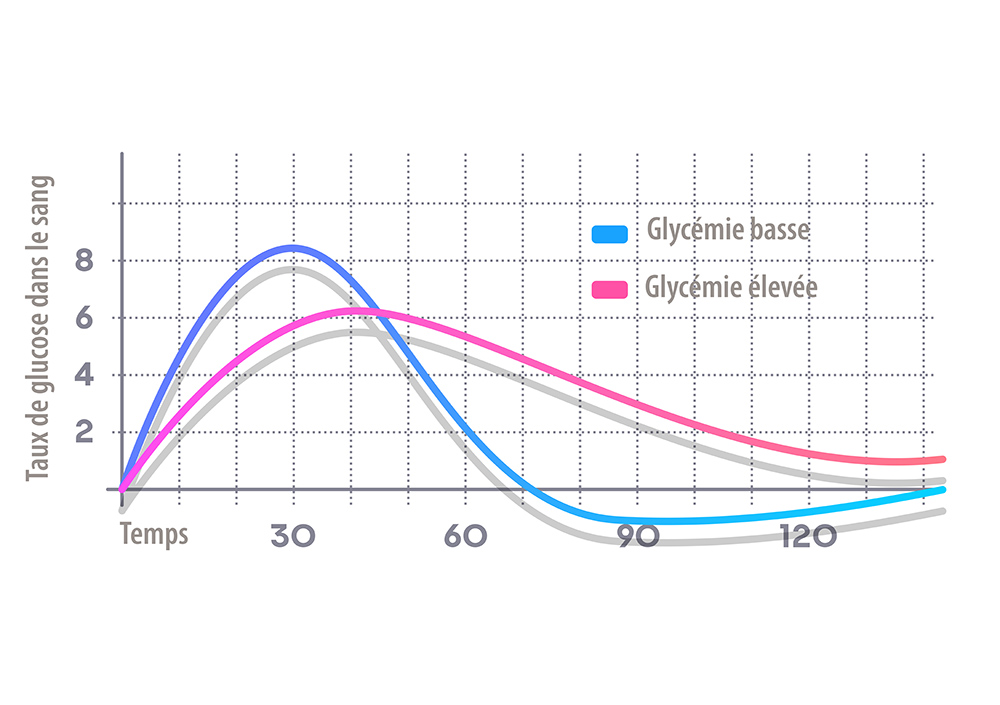
Carbohydrates with a high glycemic index (glucose, sucrose, dextrose, maltodextrins, etc. ) are assimilated very quickly and lead to a rapid increase in blood sugar levels, which causes a spike in insulin (the hormone that stores energy).
Carbohydrates with a low glycemic index provide prolonged energy over time (starch, fructose). The glycaemic index therefore reflects the speed at which carbohydrates are absorbed into the bloodstream. For example, a glycaemic index of around 20 means that it is 20% of that of pure glucose.
This means that it is absorbed into the bloodstream 5 times more slowly than pure glucose, allowing for a gradual release of energy over time.
Carbohydrates are an important source of energy for the body's cells. However, while the needs of the cells are continuous, the supply of carbohydrates is discontinuous (after meals). The constitution of carbohydrate reserves, in the form of complex molecules (significant storage without creating water imbalances), therefore allows the body to have carbohydrates available at any time. These carbohydrate reserves are mainly in the form of glycogen.
In humans, glycogen is synthesised in liver cells and muscle cells. Only liver glycogen can then be redistributed to other cells in the body. Glycogen alone can account for 10% of liver weight and 1% of muscle weight.
In the event of an excessive intake of sugar through the diet, there is a second form of storage, which is much less limited in quantity, and which is constituted by fats. These are mainly made up of triglycerides, corresponding to 3 fatty acids linked to a glycerol.
Of course, these reserves can be used to provide energy to the body's cells if necessary, for example in the event of long term physical activity (running, cycling, swimming, etc. . . . ).
CARBOHYDRATES AND PERFORMANCE
It is now well established that it is important for athletes to ingest carbohydrates when preparing for and/or participating in a sporting event 1. Scientists have shown the value of ingesting carbohydrates during exercise 2 to improve endurance performance; ingesting carbohydrates during exercise helps to delay the onset of fatigue 3.
Like an engine, muscles need fuel. The energy we need comes from three main sources: carbohydrates, fats and proteins, with carbohydrates being the preferred fuel for muscles during intense and prolonged exercise.
Carbohydrate intake should be a minimum of 100g per day, the recommended dietary allowances are 125 to 175g per day which represents 50 to 55% of total energy intake. In terms of quality, two thirds of the intake should be in the form of complex sugars (starchy foods, pulses, green vegetables, milk) and one third in the form of simple sugars (sweet products, confectionery, pastries, sweetened drinks).
BEFORE EXERCISE
It is generally recommended to eat a meal rich in complex carbohydrates with a low or medium glycemic index such as pasta, rice (cooked "al dente" or wholemeal), potatoes, eaten several days to several hours (5h to 3h) before a competition, allow you to
energy. It will be released progressively and will be essential during a long term effort (effort requiring endurance).
DURING EXERCISE
Carbohydrates with a high glycemic index such as glucose, maltose, dextrose, sucrose and maltodextrins, consumed regularly before and during exercise, are rapidly absorbed and allow the glucose in the body to be renewed. This intake helps to "boost" the body and avoid hypoglycaemia, which is harmful to performance.
AFTER EXERCISE
Recovery is not a passive process: replacing lost carbohydrates is one of the most important things to help the body recover. Consuming carbohydrate-rich foods or fluids immediately after an intense workout will help the muscles begin to recover, and take advantage of the increased glycogen levels stored in the body. As a general rule, stored glycogen levels increase within 2 hours of exercise, giving the opportunity to replenish glycogen stores.
To optimise their effectiveness, it is advisable to combine different carbohydrate sources (e. g. glucose + sucrose, glucose + fructose, glucose + sucrose + fructose or maltodextrin + fructose) in order to increase the rate of absorption of carbohydrates and therefore their use by the body.